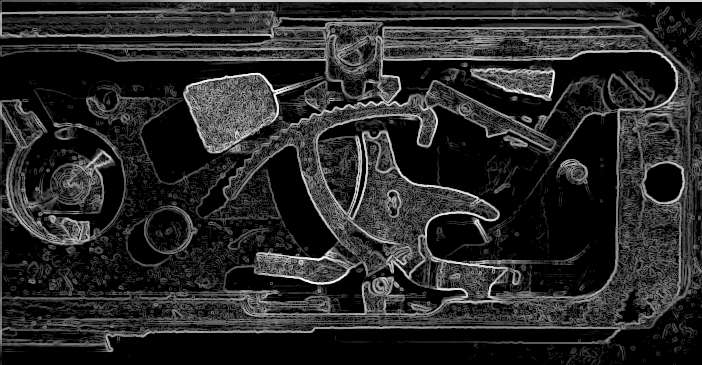
The VEF Minox Riga: a true icon of subminiature photography, a piece of history that fits right into your palm. This isn’t just a camera; it’s a testament to 1930s engineering and a faithful companion for countless “moments of now” captured across the decades.
But as with any vintage masterpiece, time – and use – can take its toll. When a legendary piece of machinery starts to show its age, the question isn’t whether to replace it, but how to bring its heart back to life.
For decades, the internal mechanics of the Riga have remained shrouded in mystery. Unlike its post-war siblings, a detailed description of the VEF Minox Riga’s inner life has never been published—and certainly not a comprehensive repair report. The delicate clockwork, the intricate shutter escapement – it has all been the closely guarded secret of a handful of master technicians.
Until now.
We’ve just published a groundbreaking, detailed look into the full repair and overhaul of a VEF Minox Riga. This isn’t just another service log; this article offers unprecedented access to the camera’s inner workings. It meticulously documents the process in pictures and videos, showing the precise, intricate work required to restore its functionality.
If you own a Riga, aspire to, or simply appreciate the history of engineering, you cannot miss this. This is the moment the curtains are finally drawn back on the internals of the most enigmatic camera in the Minox family. This is the moment when the curtain is finally lifted on the mysterious inner workings of the first camera in the Minox family.
Click here to read the full article about the repair of the VEF Minox Riga – world premiere.
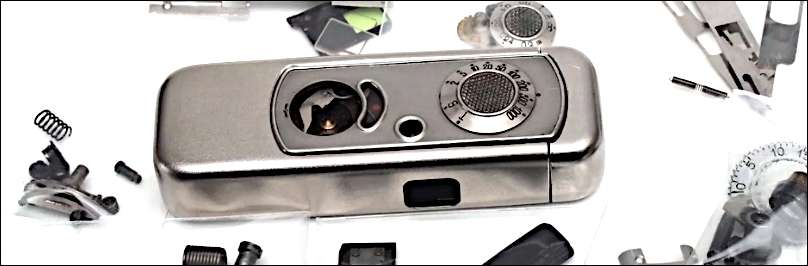
Good morning, I apologize in advance for the inconvenience, but I’d like to ask if it’s possible to contact Mr. Fenner, the man responsible for the fantastic restoration of the Riga… Let me explain:
A few days ago I bought a non-functioning Riga on eBay.it (the shutter won’t fire and the shutter speed dial is jammed), so I’d like to venture, with the utmost caution, into repairing it, also thanks to the valuable information the man has kindly provided.
This camera, among other things, appears to be a sort of prototype about which there seems to be no information (I’ve also contacted MinoxDoc and DAG about this matter) because it has a 6-tooth drive sprocket instead of the usual 12 and then 3, perhaps a sort of transitional model…
The problem I’m having — Mr. Fenner didn’t mention it because his Riga seems to be arrived to him disassembled — is that I’m somewhat unsure about the initial “opening” sequence because the two screws in the film compartment (picture “MinRig”) seem to be in different positions than those illustrated for the Minox “Germany” cameras like the “A” model of the other picture.
As you explained so well in: https://moments-of-now.com/open-the-housing-of-a-minox/, in the “German” machines there is a locking screw that precedes the loosening of the “star” ring nut.
On the Riga there is a similar star screw, but in a different position than the previous one, and the only visible screw is in a different position and doesn’t seem to lock the other one. Should I proceed directly to loosen the star screw? I wouldn’t want to damage anything with a clumsy attempt…
Of course, if you know the right technique, you can certainly point me in the right direction without disturbing Mr. Fenner…
Thanks for anything you can tell me.
Folco
Rome
Folco,
greetings to Rome! Thank you so much for your kind words and for sharing the fascinating details about your Riga. Finding a model with a 6-tooth drive sprocket sounds like a true discovery.
You are absolutely right to be cautious. Since your questions regarding the “star” nut and the specific screw positions are very technical, the best person to guide you is indeed Mr. Fenner. He has a profound understanding of the Riga’s internal architecture.
I have your email address from your comment registration and will take the liberty of forwarding your request directly to Mr. Fenner. This way, you can exchange photos and technical details directly with him to ensure that your rare find is preserved and repaired with the “utmost caution” you mentioned.
Please keep us updated on what you find inside — I’m sure many readers would love to know!
Thomas
Other picture